Six injured after car smashes into On Nut shopping mall
Uthenthawai students and alumni declare truce with Pathumwan rivals
Anti-graft groups want political parties to commit to fight against corruption
AI In-Brief
Thailand News in Brief
Thai PBS World
Thailand and the world, every day
AI can make mistakes. Please double-check.
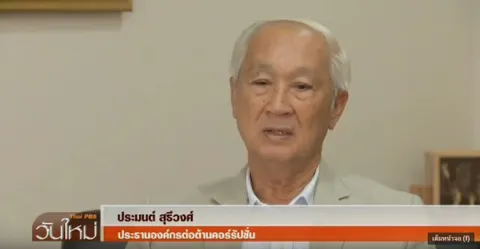
Anti-graft groups want political parties to commit to fight against corruption
23 Sept 06:41Key points summarised by AI
A coalition of anti-graft organizations, including ACT and the Foundation for Thai People, is pressuring political parties to incorporate strong anti-corruption policies into their platforms.
They conducted a 30-day opinion survey, gathering input from 8,000 respondents, to gauge public expectations and concerns regarding corruption from politicians.
Survey results indicate a significant public demand for action, with 90% of respondents unwilling to tolerate corruption and 86% ready to join the fight, reflecting an improved Corruption Situation Index (CSI).
Leaders emphasize that corruption undermines all other policy areas, from social welfare to development, making it a crucial issue for political parties to address seriously.
The groups plan to widely disseminate the poll results via social media and will follow up to ensure political parties commit to and act on their anti-corruption pledges.
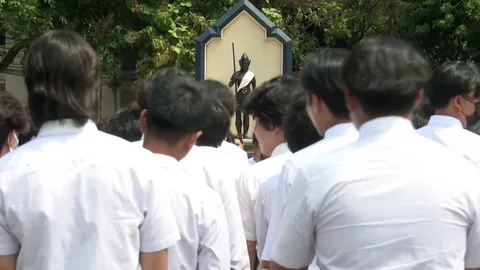
Uthenthawai students and alumni declare truce with Pathumwan rivals
Yesterday 20:34Key points summarised by AI
Uthenthawai students and alumni have pledged to cease violent clashes with Pathumwan Institute rivals, coinciding with their campus's reopening after a 90-day closure.
The Minister of Higher Education is mediating the long-running conflict, while the campus closure has significantly disrupted in-person classes and laboratory work for over 1,000 students.
Uthenthawai resists relocation from its current site, citing a historical land grant from King Rama VI, despite Chulalongkorn University's plans to reclaim the land for an educational hub.
Concerns are mounting over the legality of the campus closure, its detrimental impact on uninvolved students, and the potential commercial development of the land, which critics argue contradicts the late King Rama VI's intentions.