Pheu Thai's entire executive committee, led by secretary-general Phumtham Wechayachai, formally resigned to allow a "new generation" of members to assume leadership.
This resignation aims to pave the way for the election of a new executive committee, addressing recent political challenges faced by the party.
Despite winning the most seats in the March 24th general election, new constitutional rules prevented Pheu Thai from forming a government, forcing the party into opposition.
The outgoing committee had a long tenure, supporting former Prime Minister Yingluck Shinawatra and leading the party through significant political events.
Speculation growing over merger between Bhumjaithai and Kla Tham parties
Today 16:46Key points summarised by AI
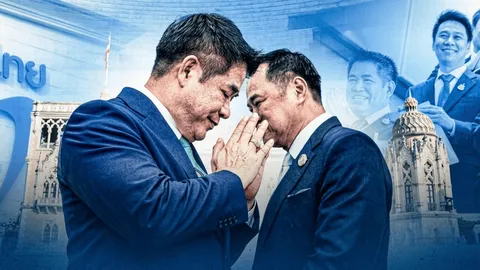
A dinner between Bhumjaithai and Kla Tham party leaders sparked rumors of a potential merger, though Bhumjaithai's leader, Anutin, downplayed it as a casual meal.
The meeting is widely interpreted as a strategic message from Bhumjaithai to the Pheu Thai party, signaling alternative support ahead of an upcoming no-confidence debate.
Thailand's Constitution (Section 99) currently prohibits direct mergers of parties with sitting MPs during the House's term, a rule designed to prevent the 'buying and selling' of MPs.
While direct mergers are restricted, MPs can still switch parties if dismissed by a three-fourths party vote or if their party dissolves, allowing for indirect political realignments.
Kla Tham's voting behavior in the censure debate will demonstrate its loyalty to the government, potentially influencing future political dynamics despite current merger restrictions.