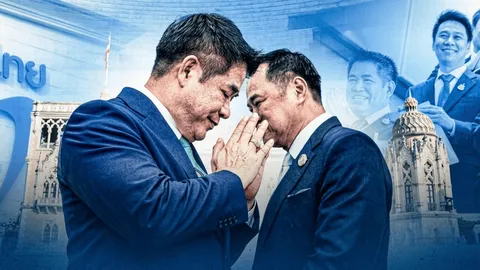
Speculation growing over merger between Bhumjaithai and Kla Tham parties
Democrat and Future Forward parties want a House panel to assess environmental, social and economic impacts of EEC projects
AI In-Brief
Thailand News in Brief
Thai PBS World
Thailand and the world, every day
AI can make mistakes. Please double-check.
Democrat and Future Forward parties want a House panel to assess environmental, social and economic impacts of EEC projects
13 Sept 12:59Key points summarised by AI
Both the Democrat and Future Forward parties have demanded the House establish an ad hoc committee to assess the environmental, social, and economic impacts of the Eastern Economic Corridor (EEC) projects.
Future Forward MPs raised concerns about the absence of a comprehensive Strategic Environmental Assessment (SEA) for the entire EEC, fearing a repeat of past environmental mistakes and questioning water/waste management strategies.
While acknowledging the EEC's economic potential, a Democrat MP criticized the government for not allocating adequate budgets to improve critical infrastructure, such as healthcare and education, in the three eastern provinces affected by the projects.
Speculation growing over merger between Bhumjaithai and Kla Tham parties
Today 16:46Key points summarised by AI
A dinner between Bhumjaithai and Kla Tham party leaders sparked rumors of a potential merger, though Bhumjaithai's leader, Anutin, downplayed it as a casual meal.
The meeting is widely interpreted as a strategic message from Bhumjaithai to the Pheu Thai party, signaling alternative support ahead of an upcoming no-confidence debate.
Thailand's Constitution (Section 99) currently prohibits direct mergers of parties with sitting MPs during the House's term, a rule designed to prevent the 'buying and selling' of MPs.
While direct mergers are restricted, MPs can still switch parties if dismissed by a three-fourths party vote or if their party dissolves, allowing for indirect political realignments.
Kla Tham's voting behavior in the censure debate will demonstrate its loyalty to the government, potentially influencing future political dynamics despite current merger restrictions.