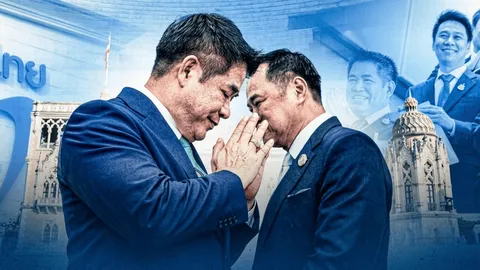
2024 Thai government and minister nicknames explained
Speculation growing over merger between Bhumjaithai and Kla Tham parties
Arisman faces arrest for not attending hearing on Uah Arthorn housing corruption
AI In-Brief
Thailand News in Brief
Thai PBS World
Thailand and the world, every day
AI can make mistakes. Please double-check.
Arisman faces arrest for not attending hearing on Uah Arthorn housing corruption
13 Sept 11:38Key points summarised by AI
The Supreme Court issued an arrest warrant for former red-shirt co-leader Arisman Pongruangrong after he failed to appear for a hearing on alleged corruption in the National Housing Authority’s Uah Arthorn housing project.
The court confiscated his five million baht bail bond due to suspicions he might jump bail, despite his lawyer stating the trial could proceed without him.
Arisman also faces a second arrest warrant for not attending the final verdict hearing for the 2009 ASEAN Summit disruption, where he and 11 others were sentenced to four years imprisonment.
All 12 convicts, including Arisman, have been blacklisted by the Immigration Bureau to prevent them from leaving the country, and their current whereabouts remain unknown.
Speculation growing over merger between Bhumjaithai and Kla Tham parties
Yesterday 16:46Key points summarised by AI
A dinner between Bhumjaithai leader Anutin Charnvirakul and Kla Tham leader Capt. Thamanat Prompow ignited widespread speculation about a potential merger between their parties.
The meeting is viewed as a strategic message to coalition partner Pheu Thai, indicating Bhumjaithai's alternative options following Pheu Thai's chief whip's remarks about not fully defending all ministers in the upcoming no-confidence debate.
A direct merger between parties with sitting MPs is currently prohibited by Section 99 of the Constitution until the House's term expires, though MPs can switch parties through dismissal or party dissolution.
These constitutional rules aim to prevent financially strong parties from easily absorbing smaller ones, a practice that historically led to single-party dominance, as seen with Thai Rak Thai's 2005 election victory.