Suchada: Meet the reluctant star of Thailand’s cryptic crypto drama
Speculation growing over merger between Bhumjaithai and Kla Tham parties
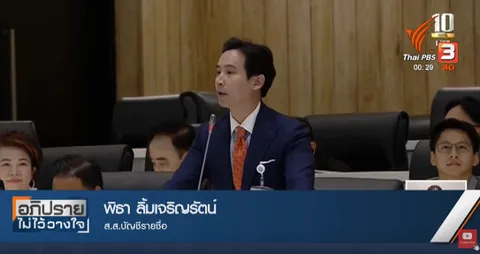
Government’s economic policies favour big corporations - Pita
AI In-Brief
Thailand News in Brief
Thai PBS World
Thailand and the world, every day
AI can make mistakes. Please double-check.
Government’s economic policies favour big corporations - Pita
14 Sept 01:16Key points summarised by AI
Pita Limjaroenrat criticized the government's economic policies, asserting they are tailored to favor large corporations, thus widening the gap between the rich and the poor.
He argued that GDP figures do not reflect the true economic hardship faced by ordinary citizens, citing a significant increase in poverty and unemployment under the current administration.
Pita highlighted alleged instances of government favoritism, including a substantial land and investment deal for the CP Group and a rushed auction of a duty-free concession.
He concluded by expressing a lack of trust in Prime Minister Prayut Chan-o-cha, stating that his continued leadership would cause further damage due to economic management that benefits only the wealthy.
Speculation growing over merger between Bhumjaithai and Kla Tham parties
Yesterday 16:46Key points summarised by AI
A dinner between Bhumjaithai and Kla Tham party leaders sparked rumors of a potential merger, though Bhumjaithai's leader, Anutin, downplayed it as a casual meal.
The meeting is widely interpreted as a strategic message from Bhumjaithai to the Pheu Thai party, signaling alternative support ahead of an upcoming no-confidence debate.
Thailand's Constitution (Section 99) currently prohibits direct mergers of parties with sitting MPs during the House's term, a rule designed to prevent the 'buying and selling' of MPs.
While direct mergers are restricted, MPs can still switch parties if dismissed by a three-fourths party vote or if their party dissolves, allowing for indirect political realignments.
Kla Tham's voting behavior in the censure debate will demonstrate its loyalty to the government, potentially influencing future political dynamics despite current merger restrictions.