Bai Lu meet-and-greet cancelled days after China’s safety warning
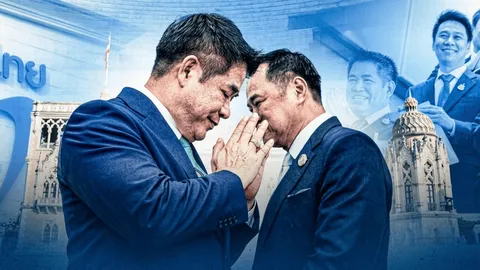
Speculation growing over merger between Bhumjaithai and Kla Tham parties
Case against setting up charter drafting assembly
AI In-Brief
Thailand News in Brief
Thai PBS World
Thailand and the world, every day
AI can make mistakes. Please double-check.
Case against setting up charter drafting assembly
13 Sept 16:30Key points summarised by AI
The article argues against forming an elected charter drafting assembly, despite its popularity, by highlighting the problematic legacy of the 1997 “People’s Charter” which was created by a similar body.
It criticizes the 1997 charter's checks-and-balances system (Constitutional Court, NACC, EC) for initially appearing effective but quickly fostering political division and accusations of bias, rather than ensuring democratic transparency.
The Constitutional Court, a key institution from the 1997 charter, remains a highly divisive entity, with its rulings frequently fueling political crises and demonstrating the difficulty in establishing a truly neutral oversight mechanism.
Ultimately, the article suggests that the 1997 charter's attempt to create an independent mechanism to curb corruption and abuse of power by elected representatives "failed miserably," indicating that a new drafting assembly is unlikely to succeed.
Speculation growing over merger between Bhumjaithai and Kla Tham parties
Today 16:46Key points summarised by AI
A dinner between Bhumjaithai and Kla Tham party leaders sparked rumors of a potential merger, though Bhumjaithai's leader, Anutin, downplayed it as a casual meal.
The meeting is widely interpreted as a strategic message from Bhumjaithai to the Pheu Thai party, signaling alternative support ahead of an upcoming no-confidence debate.
Thailand's Constitution (Section 99) currently prohibits direct mergers of parties with sitting MPs during the House's term, a rule designed to prevent the 'buying and selling' of MPs.
While direct mergers are restricted, MPs can still switch parties if dismissed by a three-fourths party vote or if their party dissolves, allowing for indirect political realignments.
Kla Tham's voting behavior in the censure debate will demonstrate its loyalty to the government, potentially influencing future political dynamics despite current merger restrictions.