Bai Lu meet-and-greet cancelled days after China’s safety warning
Speculation growing over merger between Bhumjaithai and Kla Tham parties
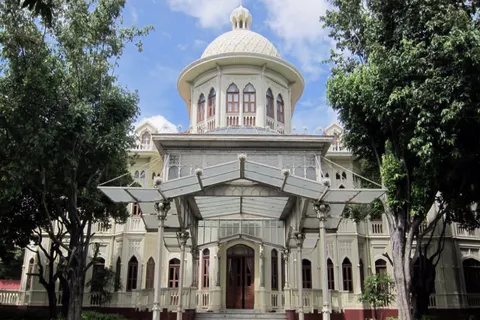
Stories behind Thailand’s very own White House – Ban Phitsanulok
AI In-Brief
Thailand News in Brief
Thai PBS World
Thailand and the world, every day
AI can make mistakes. Please double-check.
Stories behind Thailand’s very own White House – Ban Phitsanulok
1 Oct 00:24Key points summarised by AI
Ban Phitsanulok functions as Thailand's official prime minister's residence, mirroring structures like the US White House, yet it has been largely unoccupied by national leaders for over four decades.
Only two Thai prime ministers have ever resided there, with the current PM, General Prayut Chan-o-cha, opting to stay in his Army quarters, a decision that recently led to a Constitutional Court case.
The mansion's consistent avoidance by premiers is attributed to both long-standing rumors of it being haunted and practical concerns, including poor soundproofing and a design perceived as more suitable for receptions than a family home.
Originally a grand private residence built in 1922, the government acquired it in 1942, and after serving various roles including a WWII coordination center, it was designated the official PM's residence in 1979.
Speculation growing over merger between Bhumjaithai and Kla Tham parties
Yesterday 16:46Key points summarised by AI
A dinner between Bhumjaithai leader Anutin Charnvirakul and Kla Tham leader Capt. Thamanat Prompow ignited widespread speculation about a potential merger between their parties.
The meeting is viewed as a strategic message to coalition partner Pheu Thai, indicating Bhumjaithai's alternative options following Pheu Thai's chief whip's remarks about not fully defending all ministers in the upcoming no-confidence debate.
A direct merger between parties with sitting MPs is currently prohibited by Section 99 of the Constitution until the House's term expires, though MPs can switch parties through dismissal or party dissolution.
These constitutional rules aim to prevent financially strong parties from easily absorbing smaller ones, a practice that historically led to single-party dominance, as seen with Thai Rak Thai's 2005 election victory.