Bai Lu meet-and-greet cancelled days after China’s safety warning
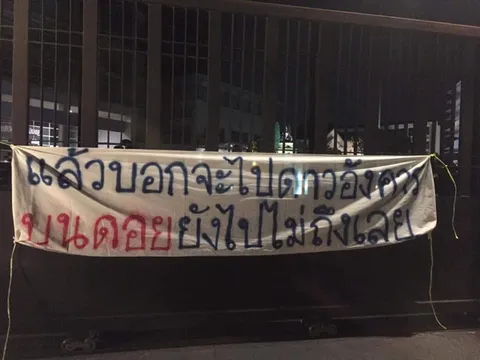
Law and the virus fail to halt Thailand’s ‘guerrilla’ protest movement
AI In-Brief
Thailand News in Brief
Thai PBS World
Thailand and the world, every day
AI can make mistakes. Please double-check.
Law and the virus fail to halt Thailand’s ‘guerrilla’ protest movement
10 Sept 02:58Key points summarised by AI
Thai anti-establishment protesters have adapted to COVID-19 restrictions and mounting legal challenges by shifting their activism online and employing "guerrilla tactics" to maintain momentum.
Key protest leaders face numerous severe charges, including sedition and the re-activated lèse majesté law (Article 112), which carries lengthy jail terms, forcing them to focus on legal defense.
Despite these pressures, the movement continues to push its core demands: monarchy reform, a democratic constitution, and the resignation of Prime Minister Prayut Chan-o-cha, believing they have successfully initiated public debate on the monarchy.
The government's re-implementation of the lèse majesté law in late 2020, after a period of suspension, has led to a significant increase in charges against hundreds of activists, including minors, seen by protesters as an attempt to suppress dissent.
Bai Lu meet-and-greet cancelled days after China’s safety warning
Yesterday 15:28Key points summarised by AI
Thailand's Tourism and Sports Minister announced the government will seek clarification from the Chinese Embassy regarding its recent travel advisory warning Chinese nationals about safety concerns in Thailand.
The travel advisory is anticipated to negatively impact the number of Chinese tourists visiting Thailand, despite recent increases in arrivals.
A meet-and-greet event featuring Chinese actress Bai Lu, a WeTV Global Ambassador, was abruptly cancelled just days after the Chinese Embassy issued its safety warning, though no official reason was provided.
The Chinese Embassy's advisory urged citizens to beware of job scams, fraudulent investments, suspicious travel arrangements, and the risk of illegal detention or being lured to the Thai-Myanmar border.
Chinese nationals were advised to verify job offers, use legitimate transport, avoid high-risk border areas, protect personal documents, and keep family informed of travel plans.