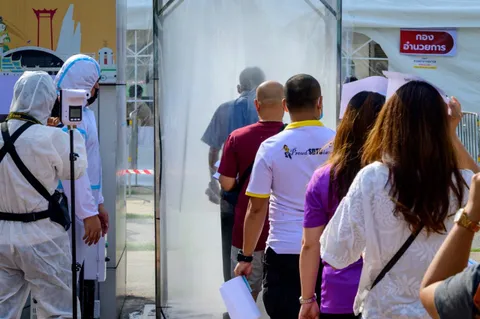
Thailand confronts a severe third COVID-19 wave, fueled by a highly infectious UK variant from Bangkok's nightlife, recording over 1,000 new cases daily for four consecutive days and a national infection surge of nearly 10,000 in a week.
Authorities responded by imposing an alcohol ban in restaurants and bars, shuttering entertainment venues nationwide for two weeks, and restricting inter-provincial travel before the Songkran holiday.
Mass testing centers are established in Bangkok, capable of screening thousands daily, yet Prime Minister Prayut Chan-o-cha affirmed no immediate lockdowns or curfews to mitigate economic impact.
The nation's vaccination drive lags significantly, with less than 1% of the population inoculated, struggling to curb the super-contagious virus strain despite efforts to accelerate rollout.
Speculation growing over merger between Bhumjaithai and Kla Tham parties
Today 16:46Key points summarised by AI
A dinner between Bhumjaithai and Kla Tham party leaders sparked rumors of a potential merger, though Bhumjaithai's leader, Anutin, downplayed it as a casual meal.
The meeting is widely interpreted as a strategic message from Bhumjaithai to the Pheu Thai party, signaling alternative support ahead of an upcoming no-confidence debate.
Thailand's Constitution (Section 99) currently prohibits direct mergers of parties with sitting MPs during the House's term, a rule designed to prevent the 'buying and selling' of MPs.
While direct mergers are restricted, MPs can still switch parties if dismissed by a three-fourths party vote or if their party dissolves, allowing for indirect political realignments.
Kla Tham's voting behavior in the censure debate will demonstrate its loyalty to the government, potentially influencing future political dynamics despite current merger restrictions.