Bai Lu meet-and-greet cancelled days after China’s safety warning
Speculation growing over merger between Bhumjaithai and Kla Tham parties
Ex-Appeals Court president denies allegations of corruption in Toyota Motors tax case
AI In-Brief
Thailand News in Brief
Thai PBS World
Thailand and the world, every day
AI can make mistakes. Please double-check.
Ex-Appeals Court president denies allegations of corruption in Toyota Motors tax case
14 Sept 01:34Key points summarised by AI
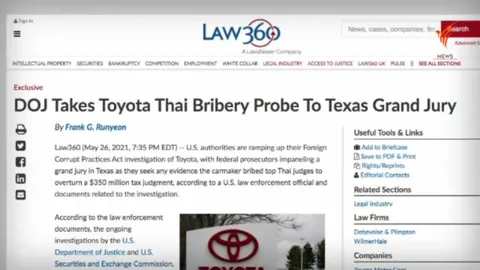
Former Appeals Court President Chaiyasit Trachutham categorically denies Law360's report implicating him in Toyota Motors Thailand's (TMT) alleged bribery scandal.
Chaiyasit recounted his direct involvement in the TMT tax dispute, where he argued for the Customs Department, leading to the Appeals Court overturning a prior ruling in TMT's favor concerning Prius import duties.
He questioned TMT's silence on the bribery claims and their legal spending, suggesting that unusually high expenditures could indicate illicit payments.
The alleged bribery is currently under investigation by the US Justice Department and the US Securities and Exchange Commission, with Thai judicial authorities also seeking details to launch their own inquiry.
Speculation growing over merger between Bhumjaithai and Kla Tham parties
Today 16:46Key points summarised by AI
A dinner between Bhumjaithai and Kla Tham party leaders sparked rumors of a potential merger, though Bhumjaithai's leader, Anutin, downplayed it as a casual meal.
The meeting is widely interpreted as a strategic message from Bhumjaithai to the Pheu Thai party, signaling alternative support ahead of an upcoming no-confidence debate.
Thailand's Constitution (Section 99) currently prohibits direct mergers of parties with sitting MPs during the House's term, a rule designed to prevent the 'buying and selling' of MPs.
While direct mergers are restricted, MPs can still switch parties if dismissed by a three-fourths party vote or if their party dissolves, allowing for indirect political realignments.
Kla Tham's voting behavior in the censure debate will demonstrate its loyalty to the government, potentially influencing future political dynamics despite current merger restrictions.