Six injured after car smashes into On Nut shopping mall
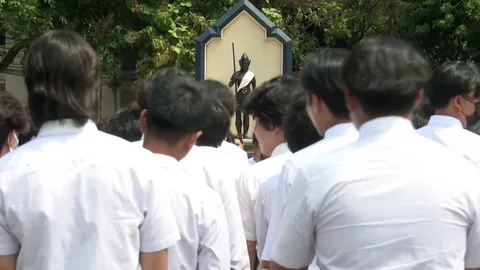
Uthenthawai students and alumni declare truce with Pathumwan rivals
Two nasal spray COVID-19 vaccines under development by Thailand’s BIOTEC
AI In-Brief
Thailand News in Brief
Thai PBS World
Thailand and the world, every day
AI can make mistakes. Please double-check.
Two nasal spray COVID-19 vaccines under development by Thailand’s BIOTEC
13 Sept 21:03Key points summarised by AI
Thai virologists at BIOTEC are developing two nasal spray COVID-19 vaccines, aiming to prevent infection directly at the respiratory system, unlike traditional injectable vaccines.
The first candidate, an Adenovirus vaccine, showed promising results in mice, preventing sickness and weight loss when administered nasally, outperforming intramuscular injections in this regard.
The second vaccine is an influenza-based spray engineered to produce antibodies against both COVID-19 and influenza, demonstrating high antibody levels in mouse trials.
Nasal spray vaccines stimulate antibodies in the nasal passage's mucosal lining, the primary entry point for the virus, offering a distinct protective mechanism.
BIOTEC plans to seek approval from Thailand’s FDA to proceed with Phases 1 and 2 of human trials for both nasal spray vaccine candidates.
Uthenthawai students and alumni declare truce with Pathumwan rivals
Yesterday 20:34Key points summarised by AI
Uthenthawai students and alumni have pledged to cease violent clashes with Pathumwan Institute rivals, coinciding with their campus's reopening after a 90-day closure.
The Minister of Higher Education is mediating the long-running conflict, while the campus closure has significantly disrupted in-person classes and laboratory work for over 1,000 students.
Uthenthawai resists relocation from its current site, citing a historical land grant from King Rama VI, despite Chulalongkorn University's plans to reclaim the land for an educational hub.
Concerns are mounting over the legality of the campus closure, its detrimental impact on uninvolved students, and the potential commercial development of the land, which critics argue contradicts the late King Rama VI's intentions.