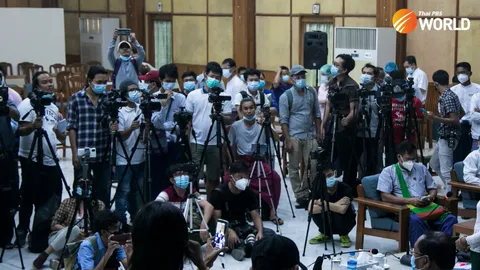
Myanmar's military junta has severely suppressed independent journalism since the February 1st coup, arresting, detaining, and reportedly torturing numerous journalists under charges like "fake news."
The junta banned private news organizations and imposed strict censorship, forcing remaining media to avoid terms like "coup" and "military government" and report only approved narratives.
Journalists face a stark choice: flee the country or go into hiding to report freely, or remain and operate under heavy self-censorship, risking their careers and ethical integrity.
This crackdown has led to the "death of the independent press" in Myanmar, as only compliant media can survive locally, threatening the long-term future of truthful reporting and press freedom.
Thailand's Education Ministry is implementing a four-pronged strategy to address its students' below-average performance in PISA 2025 and tackle significant educational inequality.
The plan prioritizes closing performance gaps by increasing funding for small and low-income schools, overhauling the curriculum to foster critical thinking, and adopting a data-driven management system to reduce teacher workload.
Key initiatives include enhancing school safety, combating cyberbullying, and expanding mental health support through peer-to-peer networks, recognizing the severe impact of distress on academic performance.
An education expert advises verifying if PISA improvements stem from structural changes, advocating for a revived STEM curriculum with practical 'learn by doing' methods, and urging bureaucratic reform to link teacher evaluations to student development.