Six injured after car smashes into On Nut shopping mall
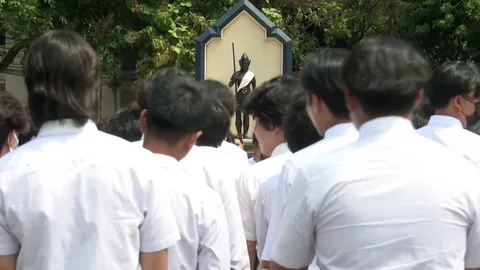
Uthenthawai students and alumni declare truce with Pathumwan rivals
Did vaccine inequality lead to the Omicron variant?
AI In-Brief
Thailand News in Brief
Thai PBS World
Thailand and the world, every day
AI can make mistakes. Please double-check.
Did vaccine inequality lead to the Omicron variant?
13 Sept 13:57Key points summarised by AI
While Omicron likely originated in an immunocompromised patient, experts link its emergence and rapid spread to widespread low immunity in populations, a direct consequence of global vaccine inequality.
The World Health Organization (WHO) repeatedly warned that 'vaccine nationalism' would prolong the pandemic, a prediction realized as rich nations achieved high vaccination rates while poorer countries, like South Africa where Omicron was first sequenced, lagged significantly.
Epidemiologists emphasize that achieving global immunity is crucial to limit viral spread and prevent new variants, advocating for equitable vaccine distribution and support for fragile health systems over ineffective measures like travel bans.
Despite initiatives like Covax, the practical challenges of vaccine distribution, including ad hoc donations with short shelf lives, hinder effective vaccination campaigns in low-income countries, exacerbating the global disparity.
Uthenthawai students and alumni declare truce with Pathumwan rivals
Yesterday 20:34Key points summarised by AI
Uthenthawai students and alumni have pledged to cease violent clashes with Pathumwan Institute rivals, coinciding with their campus's reopening after a 90-day closure.
The Minister of Higher Education is mediating the long-running conflict, while the campus closure has significantly disrupted in-person classes and laboratory work for over 1,000 students.
Uthenthawai resists relocation from its current site, citing a historical land grant from King Rama VI, despite Chulalongkorn University's plans to reclaim the land for an educational hub.
Concerns are mounting over the legality of the campus closure, its detrimental impact on uninvolved students, and the potential commercial development of the land, which critics argue contradicts the late King Rama VI's intentions.