Bai Lu meet-and-greet cancelled days after China’s safety warning
Speculation growing over merger between Bhumjaithai and Kla Tham parties
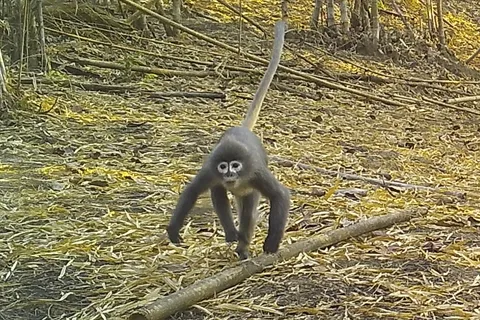
Ghostly monkey among 224 new Mekong region species
AI In-Brief
Thailand News in Brief
Thai PBS World
Thailand and the world, every day
AI can make mistakes. Please double-check.
Ghostly monkey among 224 new Mekong region species
26 Sept 23:24Key points summarised by AI
The World Wildlife Fund (WWF) announced the discovery of 224 new species in the Greater Mekong region, notably a Popa langur monkey with distinct white circles around its eyes.
This discovery underscores the region's immense biodiversity, including dozens of new reptiles, frogs, fish, and 155 plant species, emphasizing its status as a critical biodiversity hotspot.
The report highlights the urgent need for habitat protection, as many newly identified species, such as the critically endangered Popa langur, face severe threats from illegal mining, logging, and human encroachment.
Scientists employed advanced methods, including genetic matching with historical museum specimens and camera traps, to identify these diverse new species across the region.
Speculation growing over merger between Bhumjaithai and Kla Tham parties
Today 16:46Key points summarised by AI
A dinner between Bhumjaithai and Kla Tham party leaders sparked rumors of a potential merger, though Bhumjaithai's leader, Anutin, downplayed it as a casual meal.
The meeting is widely interpreted as a strategic message from Bhumjaithai to the Pheu Thai party, signaling alternative support ahead of an upcoming no-confidence debate.
Thailand's Constitution (Section 99) currently prohibits direct mergers of parties with sitting MPs during the House's term, a rule designed to prevent the 'buying and selling' of MPs.
While direct mergers are restricted, MPs can still switch parties if dismissed by a three-fourths party vote or if their party dissolves, allowing for indirect political realignments.
Kla Tham's voting behavior in the censure debate will demonstrate its loyalty to the government, potentially influencing future political dynamics despite current merger restrictions.