Thailand and Laos elevated their 70-year-old relations to a "Strategic Partnership for Growth and Sustainable Development" during Laotian Prime Minister Phankham Viphavanh's visit to Thailand.
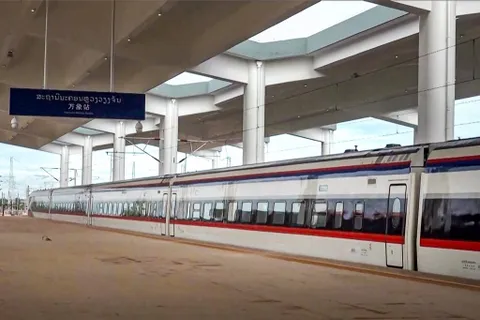
Laos is transforming into a land-linked hub with its high-speed rail connecting to Southern China, with planned extensions to Thailand, Vietnam, and Cambodia to provide crucial "sea-link" access and expand regional trade.
Bilateral talks focused on enhancing cooperation in key areas including post-COVID economic recovery, improving rail and digital connectivity, bolstering border security against human trafficking, and developing public health and digital skills.
Business discussions highlighted the high-speed train's value in boosting regional economic development, particularly for Thai manufactured and agricultural products, and exploring shared business ecosystems in ICT, agriculture, and tourism.
Thailand's Education Ministry is implementing a four-pronged strategy to address its students' below-average performance in PISA 2025 and tackle significant educational inequality.
The plan prioritizes closing performance gaps by increasing funding for small and low-income schools, overhauling the curriculum to foster critical thinking, and adopting a data-driven management system to reduce teacher workload.
Key initiatives include enhancing school safety, combating cyberbullying, and expanding mental health support through peer-to-peer networks, recognizing the severe impact of distress on academic performance.
An education expert advises verifying if PISA improvements stem from structural changes, advocating for a revived STEM curriculum with practical 'learn by doing' methods, and urging bureaucratic reform to link teacher evaluations to student development.