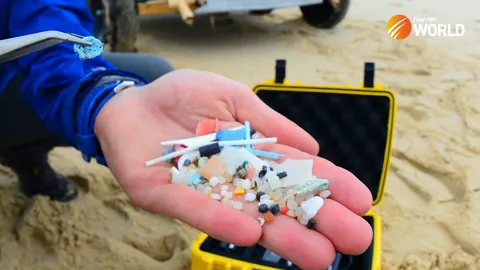
'They're everywhere': microplastics in oceans, air and human body
AI In-Brief
Thailand News in Brief
Thai PBS World
Thailand and the world, every day
AI can make mistakes. Please double-check.
'They're everywhere': microplastics in oceans, air and human body
9 Oct 06:55Key points summarised by AI
Widespread Contamination: Microplastics are ubiquitous, found from ocean depths and the air we breathe to increasingly within human organs like lungs, spleen, kidneys, and even the placenta.
Human Absorption: Scientific studies confirm microplastic presence in the human body, indicating prolonged ingestion and inhalation, though the precise health implications are still under investigation.
Potential Health Risks: While direct human health impacts are unconfirmed, chemicals in microplastics have shown adverse effects on animal health, raising concerns about potential impacts on human growth, metabolism, and reproduction.
Urgent Global Concern: The pervasive nature of microplastic pollution highlights a significant environmental and potential health crisis, prompting calls for reduced plastic use and a new UN treaty to address the global scourge.
Thailand's Education Ministry is implementing a four-pronged strategy to address its students' below-average performance in PISA 2025 and tackle significant educational inequality.
The plan prioritizes closing performance gaps by increasing funding for small and low-income schools, overhauling the curriculum to foster critical thinking, and adopting a data-driven management system to reduce teacher workload.
Key initiatives include enhancing school safety, combating cyberbullying, and expanding mental health support through peer-to-peer networks, recognizing the severe impact of distress on academic performance.
An education expert advises verifying if PISA improvements stem from structural changes, advocating for a revived STEM curriculum with practical 'learn by doing' methods, and urging bureaucratic reform to link teacher evaluations to student development.