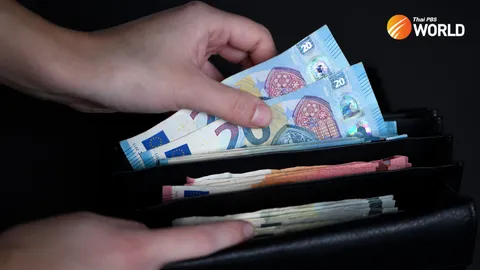
What's next for the euro after slump against dollar?
AI In-Brief
Thailand News in Brief
Thai PBS World
Thailand and the world, every day
AI can make mistakes. Please double-check.
What's next for the euro after slump against dollar?
13 Sept 13:32Key points summarised by AI
The euro plunged to a two-decade low, reaching parity with the dollar, primarily due to the Ukraine war and mounting economic risks in the EU.
A critical factor for the euro's recovery is avoiding a halt in Russian gas supplies, as a cutoff could trigger a severe European recession and further devalue the currency.
The European Central Bank faces pressure to deliver significant interest rate hikes (e.g., 50-75 basis points) to bolster the euro and combat inflation, while carefully navigating potential fragmentation risks.
The dollar's strength, largely fueled by the US Federal Reserve's aggressive rate hikes, is a key determinant; a potential slowdown in the Fed's tightening later in the year could alleviate pressure on the euro.
Thailand's Education Ministry is implementing a four-pronged strategy to address its students' below-average performance in PISA 2025 and tackle significant educational inequality.
The plan prioritizes closing performance gaps by increasing funding for small and low-income schools, overhauling the curriculum to foster critical thinking, and adopting a data-driven management system to reduce teacher workload.
Key initiatives include enhancing school safety, combating cyberbullying, and expanding mental health support through peer-to-peer networks, recognizing the severe impact of distress on academic performance.
An education expert advises verifying if PISA improvements stem from structural changes, advocating for a revived STEM curriculum with practical 'learn by doing' methods, and urging bureaucratic reform to link teacher evaluations to student development.