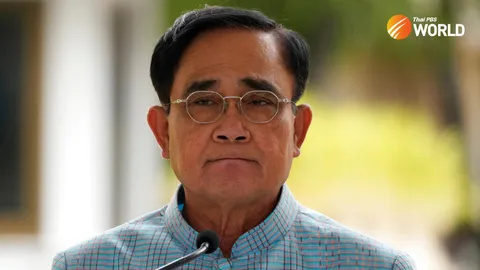
The Constitutional Court suspended Prime Minister Prayut Chan-o-cha from his duties, pending a review of whether he has exceeded his 8-year term limit.
A legal expert estimates the court's final decision will take at least 30 days, allowing 15 days for Prayut to submit evidence and another 15+ days for judicial deliberation.
Prawit Wongsuwan has assumed the role of acting prime minister, with his tenure directly tied to the court's ultimate ruling on Prayut's eligibility.
Some observers believe the interim suspension helps reduce political tensions, despite opposition parties and demonstrators demanding an immediate end to Prayut's term.
The next general election is not expected in the near future, likely occurring around May next year, following the current parliament's term and the APEC meeting.
Thailand's Education Ministry is implementing a four-pronged strategy to address its students' below-average performance in PISA 2025 and tackle significant educational inequality.
The plan prioritizes closing performance gaps by increasing funding for small and low-income schools, overhauling the curriculum to foster critical thinking, and adopting a data-driven management system to reduce teacher workload.
Key initiatives include enhancing school safety, combating cyberbullying, and expanding mental health support through peer-to-peer networks, recognizing the severe impact of distress on academic performance.
An education expert advises verifying if PISA improvements stem from structural changes, advocating for a revived STEM curriculum with practical 'learn by doing' methods, and urging bureaucratic reform to link teacher evaluations to student development.