Nationwide crackdown launched on illegal nominee shareholders and land holdings
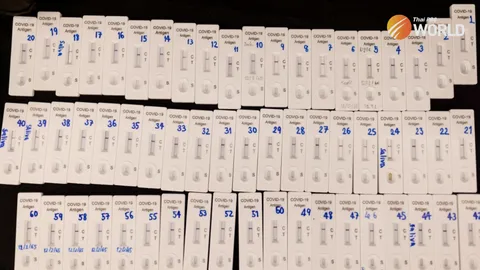
How will life in Thailand change when the COVID state of emergency ends this month?
AI In-Brief
Thailand News in Brief
Thai PBS World
Thailand and the world, every day
AI can make mistakes. Please double-check.
How will life in Thailand change when the COVID state of emergency ends this month?
13 Sept 08:00Key points summarised by AI
Thailand will officially lift its COVID-19 emergency decree and downgrade the virus from a dangerous to a monitored communicable disease from September 30, signaling a significant easing of restrictions.
Travelers can now enter Thailand without showing proof of vaccination or negative COVID tests, and individuals with mild or no symptoms will likely no longer need to self-isolate.
Controls on large events and gatherings will disappear, allowing for more festivals and concerts, while offices and schools may still require testing for respiratory issues but permit attendance with masks for mild cases.
The Center for COVID-19 Situation Administration (CCSA) will be disbanded, with the Cabinet taking over COVID-control operations, though authorities clarify COVID-19 is not yet endemic despite the changes.
Nationwide crackdown launched on illegal nominee shareholders and land holdings
Yesterday 15:20Key points summarised by AI
Thailand's Prime Minister Anutin Charnvirakul initiated a nationwide crackdown on illegal Thai nominee shareholders in foreign-run businesses and land holdings to safeguard national interests.
The government will integrate efforts across all relevant agencies to target illicit foreign operations, forced sales of illegally acquired property, and high-risk land ownership schemes.
Key strategies include auditing suspect land and building holdings, establishing a long-term monitoring system, and cross-referencing data from various authorities to trace ultimate beneficial owners.
Prime Minister Anutin emphasized that no influential figures or corrupt officials are above the law, promising straightforward prosecution, asset seizures, and protection for enforcing officers.
Beyond land ownership, the integrated crackdown will also extend to tackle transnational crimes, including drug and human trafficking.