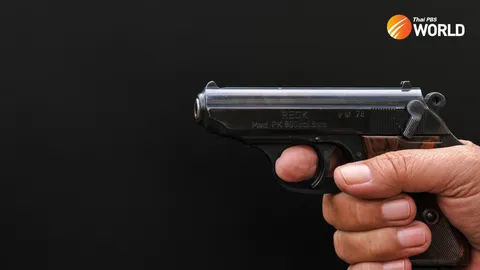
Thailand grapples with critical gun control failures, highlighted by its deadliest mass shooting and ranking among the highest in Southeast Asia for gun violence and private gun ownership.
Easy access to firearms, both legal and illegal via black markets and cross-border trafficking, fuels widespread gun possession among civilians and officials.
A "gun welfare" program allows state officials to acquire unlimited cheap firearms, creating a significant loophole that permits hoarding, resale, and continued access for dismissed officers, as seen in the recent tragedy.
Societal distrust in state protection and media glorification of gun use further contribute to a culture where gun ownership is perceived as essential for self-defense.
Proposed reforms include stricter gun license revocation for individuals with drug abuse or misconduct records, confiscating weapons from problematic officers, mandatory mental health evaluations, and limiting firearm imports under official schemes.
Thailand's Education Ministry is implementing a four-pronged strategy to address its students' below-average performance in PISA 2025 and tackle significant educational inequality.
The plan prioritizes closing performance gaps by increasing funding for small and low-income schools, overhauling the curriculum to foster critical thinking, and adopting a data-driven management system to reduce teacher workload.
Key initiatives include enhancing school safety, combating cyberbullying, and expanding mental health support through peer-to-peer networks, recognizing the severe impact of distress on academic performance.
An education expert advises verifying if PISA improvements stem from structural changes, advocating for a revived STEM curriculum with practical 'learn by doing' methods, and urging bureaucratic reform to link teacher evaluations to student development.