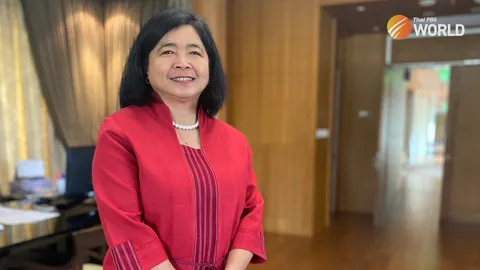
Thai Ambassador Pattarat Hongtong discovered India's vast diversity, noting that despite visiting 16 states, she continually encounters new facets, reinforcing the "Incredible India" experience.
Her diplomatic posting began with virtual credential presentations during the 2021 COVID-19 lockdown, marking a "new chapter of diplomacy."
Thailand and India share a profound cultural heritage, with ancient trade and religious ties influencing Thai language, literature, and rituals, forming the core of their relationship.
Bilateral relations are flourishing, marked by record-high trade of $14 billion and a surge in Indian tourism to Thailand, alongside opportunities for collaboration in IT and medicine.
Thailand recognizes India as a rising regional power, actively seeking to strengthen their relationship through various multilateral platforms for mutual benefit and shared interests.
Thailand's Education Ministry is implementing a four-pronged strategy to address its students' below-average performance in PISA 2025 and tackle significant educational inequality.
The plan prioritizes closing performance gaps by increasing funding for small and low-income schools, overhauling the curriculum to foster critical thinking, and adopting a data-driven management system to reduce teacher workload.
Key initiatives include enhancing school safety, combating cyberbullying, and expanding mental health support through peer-to-peer networks, recognizing the severe impact of distress on academic performance.
An education expert advises verifying if PISA improvements stem from structural changes, advocating for a revived STEM curriculum with practical 'learn by doing' methods, and urging bureaucratic reform to link teacher evaluations to student development.