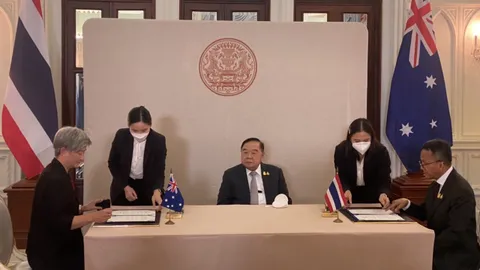
Australia and Thailand celebrated 70 years of diplomatic relations, marked by Foreign Minister Penny Wong's visit to Bangkok to deepen their strategic partnership.
Both nations signed a comprehensive plan of action, committing to enhanced cooperation across various sectors including anti-trafficking, cybersecurity, digital economy, and climate change mitigation.
Australia pledged support for Thailand's green initiatives, such as electric public buses and climate-resilient cities, while Thailand actively encouraged increased Australian business investment.
As middle powers, both countries aim to bolster regional peace, predictability, and adherence to international rules and norms, with Australia reaffirming its strong support for ASEAN centrality.
Thailand's Education Ministry is implementing a four-pronged strategy to address its students' below-average performance in PISA 2025 and tackle significant educational inequality.
The plan prioritizes closing performance gaps by increasing funding for small and low-income schools, overhauling the curriculum to foster critical thinking, and adopting a data-driven management system to reduce teacher workload.
Key initiatives include enhancing school safety, combating cyberbullying, and expanding mental health support through peer-to-peer networks, recognizing the severe impact of distress on academic performance.
An education expert advises verifying if PISA improvements stem from structural changes, advocating for a revived STEM curriculum with practical 'learn by doing' methods, and urging bureaucratic reform to link teacher evaluations to student development.