OECD supports Thailand’s accession to the organisation in 2028
Thailand secures US$200m World Bank loan for clean energy and low carbon cities
Thai police to overhaul service pistol management and gun welfare scheme
AI In-Brief
Thailand News in Brief
Thai PBS World
Thailand and the world, every day
AI can make mistakes. Please double-check.
Thai police to overhaul service pistol management and gun welfare scheme
13 Sept 10:54Key points summarised by AI
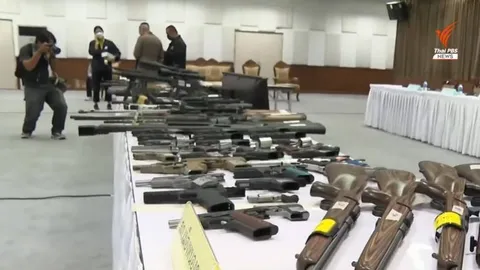
The Royal Thai Police (RTP) is revising its service pistol management and the "welfare gun program," which enables officers to buy firearms at reduced prices.
This overhaul is a direct response to recent gun-related tragedies, including a mass shooting by a former police officer, service weapon theft, and widespread corruption within the welfare scheme.
The RTP plans to collaborate with the Ministry of Interior to tighten gun permit issuance and is exploring options to either terminate or significantly modify the welfare program, such as extending the mandatory retention period for purchased weapons.
To encourage the use of service pistols, the RTP is considering adopting a US Army-style management system and reducing fines for lost or damaged service weapons, addressing officers' preference for personal firearms due to current penalties.
Deputy national police chief Pol Gen Torsak Sukvimol openly admitted to widespread corruption in gun permit issuance, citing an instance where one officer issued over 600 permits to a single individual.
Thailand secures US$200m World Bank loan for clean energy and low carbon cities
Yesterday 09:24Key points summarised by AI
Thailand secured a US$200 million loan from the World Bank to significantly invest in clean energy and low-carbon urban development initiatives.
The program aims to drive clean energy funding and low-carbon growth, ensuring a just transition for small and medium-sized enterprises, workers, farmers, and local communities.
Channelled through the Export-Import Bank of Thailand, the loan will fund energy efficiency upgrades in public buildings and industrial areas, including rooftop solar installations and electrical system modernizations, reducing initial capital burdens via Energy Service Companies (ESCOs).