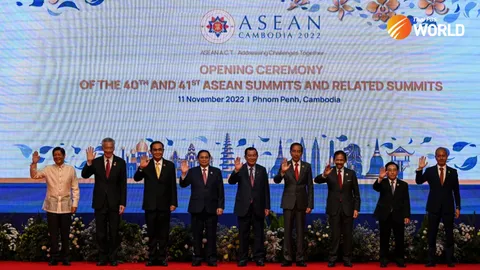
ASEAN leaders reaffirmed their 5-point consensus (5PC) on Myanmar, criticizing the lack of progress in its implementation and urging the Myanmar Armed Forces to fulfill their commitments.
Leaders expressed grave concern over Myanmar's "critical and fragile" situation, noting escalating violence that undermines regional stability and ASEAN's community-building efforts.
ASEAN foreign ministers are tasked with developing a detailed implementation plan for the 5PC, complete with measurable indicators and a specific timeline.
The Special Envoy of the ASEAN Chair on Myanmar is mandated to engage all stakeholders in a flexible and informal manner to facilitate a peaceful resolution.
ASEAN called for de-escalation, condemned all violence (specifically naming the Tatmadaw), urged accountability for armed parties, and sought support from the UN and external partners for the 5PC.
Thailand's Education Ministry is implementing a four-pronged strategy to address its students' below-average performance in PISA 2025 and tackle significant educational inequality.
The plan prioritizes closing performance gaps by increasing funding for small and low-income schools, overhauling the curriculum to foster critical thinking, and adopting a data-driven management system to reduce teacher workload.
Key initiatives include enhancing school safety, combating cyberbullying, and expanding mental health support through peer-to-peer networks, recognizing the severe impact of distress on academic performance.
An education expert advises verifying if PISA improvements stem from structural changes, advocating for a revived STEM curriculum with practical 'learn by doing' methods, and urging bureaucratic reform to link teacher evaluations to student development.