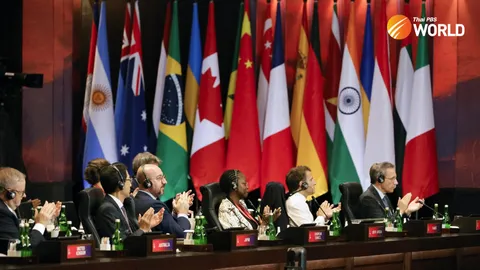
G20 leaders pledged to pursue the ambitious 1.5 degrees Celsius global warming target, revitalizing the ongoing UN climate talks (COP27) in Egypt.
The communique urged progress on 'loss and damage' funding for developing countries, a major point of contention at COP27, though without a specific mechanism.
G20 nations reaffirmed commitments to phase out 'inefficient' fossil fuel subsidies and accelerate clean energy deployment, including phasing down unabated coal power.
While some analysts welcomed the G20's positive signals, others criticized the statement for missing opportunities to deliver more concrete financial commitments.
Thailand's Education Ministry is implementing a four-pronged strategy to address its students' below-average performance in PISA 2025 and tackle significant educational inequality.
The plan prioritizes closing performance gaps by increasing funding for small and low-income schools, overhauling the curriculum to foster critical thinking, and adopting a data-driven management system to reduce teacher workload.
Key initiatives include enhancing school safety, combating cyberbullying, and expanding mental health support through peer-to-peer networks, recognizing the severe impact of distress on academic performance.
An education expert advises verifying if PISA improvements stem from structural changes, advocating for a revived STEM curriculum with practical 'learn by doing' methods, and urging bureaucratic reform to link teacher evaluations to student development.