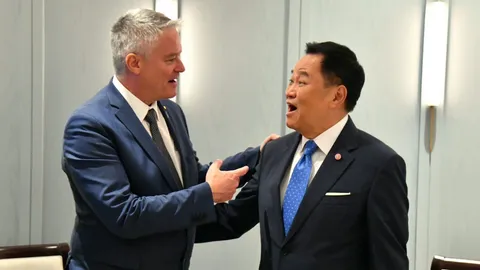
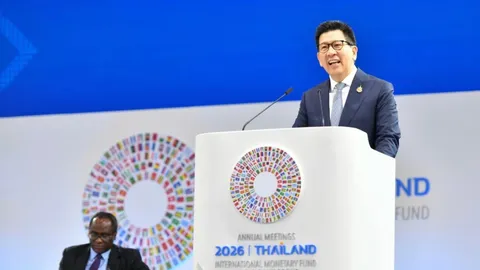
OECD supports Thailand’s accession to the organisation in 2028
Thailand secures US$200m World Bank loan for clean energy and low carbon cities
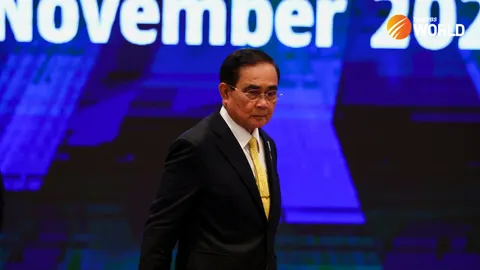
APEC ministers agree on a joint statement
AI In-Brief
Thailand News in Brief
Thai PBS World
Thailand and the world, every day
AI can make mistakes. Please double-check.
APEC ministers agree on a joint statement
13 Sept 13:21Key points summarised by AI
APEC ministers successfully agreed on a joint statement, marking the first such document issued for an APEC Summit hosted by Thailand.
The statement outlines a post-COVID pandemic economic growth strategy, addressing critical issues like environmental concerns, climate change, and the war in Ukraine, while also pushing for a Free Trade Area of the Asia-Pacific (FTA-AP).
Most members strongly condemned the war in Ukraine, highlighting its severe impact on the global economy, including inflation, supply chain disruptions, and energy/food insecurity, though acknowledging differing views.
North Korea's ballistic missile launch prompted an emergency meeting among several leaders, with Japan, the US, South Korea, Canada, Australia, and New Zealand publicly deploring the action.
Thailand anticipates the adoption of its "Bangkok Goals" on the Bio-Circular-Green economy concept, aiming to guide APEC economies towards balanced, sustainable, and inclusive development.
Thailand secures US$200m World Bank loan for clean energy and low carbon cities
Today 09:24Key points summarised by AI
Thailand secured a US$200 million loan from the World Bank to significantly invest in clean energy and low-carbon urban development initiatives.
The program aims to drive clean energy funding and low-carbon growth, ensuring a just transition for small and medium-sized enterprises, workers, farmers, and local communities.
Channelled through the Export-Import Bank of Thailand, the loan will fund energy efficiency upgrades in public buildings and industrial areas, including rooftop solar installations and electrical system modernizations, reducing initial capital burdens via Energy Service Companies (ESCOs).