OECD supports Thailand’s accession to the organisation in 2028
Thailand secures US$200m World Bank loan for clean energy and low carbon cities
APEC leaders’ declaration approved as Thai PM hails the summit as a success
AI In-Brief
Thailand News in Brief
Thai PBS World
Thailand and the world, every day
AI can make mistakes. Please double-check.
APEC leaders’ declaration approved as Thai PM hails the summit as a success
13 Sept 04:52Key points summarised by AI
APEC leaders approved a declaration endorsing Thailand's "Bangkok Goals" for a bio-circular-green economy and committing to establish a free trade area across 21 economies.
Thai Prime Minister Prayut Chan-o-cha hailed the summit as a collective success, emphasizing it was the first face-to-face meeting for leaders in four years, fostering vital dialogue.
The declaration incorporates Thailand's BCG economy concept, promoting inclusive, sustainable, and environmentally friendly development, while also pushing for the creation of a Free Trade Area of the Asia-Pacific (FTAAP).
The summit provided a crucial platform for leaders to exchange views with special guests, the private sector (APEC Business Advisory Council), and youth representatives.
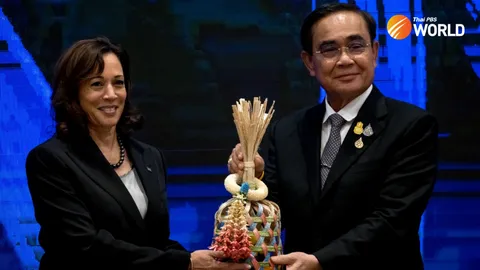
Thailand concluded its chairmanship by symbolically handing over to the US, signifying the next phase of APEC leadership and continued regional cooperation.
Thailand secures US$200m World Bank loan for clean energy and low carbon cities
Today 09:24Key points summarised by AI
Thailand secured a US$200 million loan from the World Bank to significantly invest in clean energy and low-carbon urban development initiatives.
The program aims to drive clean energy funding and low-carbon growth, ensuring a just transition for small and medium-sized enterprises, workers, farmers, and local communities.
Channelled through the Export-Import Bank of Thailand, the loan will fund energy efficiency upgrades in public buildings and industrial areas, including rooftop solar installations and electrical system modernizations, reducing initial capital burdens via Energy Service Companies (ESCOs).