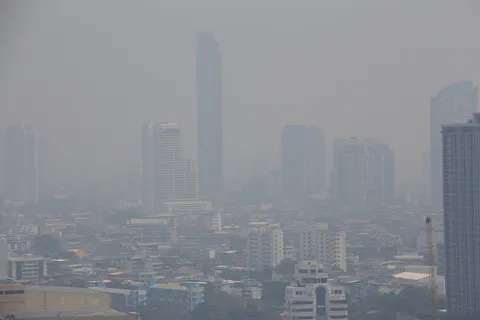
Rising smog prompts burning question: Can Thailand break PM2.5 cycle?
AI In-Brief
Thailand News in Brief
Thai PBS World
Thailand and the world, every day
AI can make mistakes. Please double-check.
Rising smog prompts burning question: Can Thailand break PM2.5 cycle?
14 Sept 14:05Key points summarised by AI
Thailand faces a severe and worsening PM2.5 smog crisis, intensifying post-COVID-19 as economic activities resume, with forecasts predicting peaks in December/January due to seasonal dry weather.
The primary drivers of hazardous PM2.5 levels are agricultural burning, vehicle emissions (compounded by delayed Euro 5 standards), and increased industrial operations.
PM2.5 is a recognized carcinogen by WHO, posing significant health risks including lung cancer, underscoring the inadequacy of Thailand's current, higher safe limits compared to international standards.
While authorities have launched multiple initiatives—from early warnings and emission controls to establishing health clinics—the country faces hurdles like insufficient air quality monitoring infrastructure and ensuring widespread compliance with new, stricter standards.
Thailand's Education Ministry is implementing a four-pronged strategy to address its students' below-average performance in PISA 2025 and tackle significant educational inequality.
The plan prioritizes closing performance gaps by increasing funding for small and low-income schools, overhauling the curriculum to foster critical thinking, and adopting a data-driven management system to reduce teacher workload.
Key initiatives include enhancing school safety, combating cyberbullying, and expanding mental health support through peer-to-peer networks, recognizing the severe impact of distress on academic performance.
An education expert advises verifying if PISA improvements stem from structural changes, advocating for a revived STEM curriculum with practical 'learn by doing' methods, and urging bureaucratic reform to link teacher evaluations to student development.