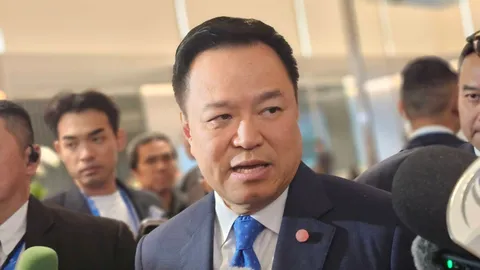
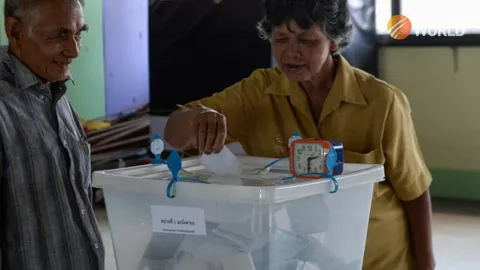
Nationwide crackdown launched on illegal nominee shareholders and land holdings
Public expects most Kla Tham MPs to back Cabinet in censure vote, NIDA Poll finds
Thailand’s election timeline explained
AI In-Brief
Thailand News in Brief
Thai PBS World
Thailand and the world, every day
AI can make mistakes. Please double-check.
Thailand’s election timeline explained
15 Sept 02:30Key points summarised by AI
Key electoral laws, including the two-ballot system, have been cleared by the Constitutional Court and await royal endorsement, expected by March, which is crucial for the upcoming general election.
Prime Minister Prayut Chan-o-cha is widely anticipated to dissolve the House early, possibly in February or March, to secure political advantage, a move that will not hinder the new electoral laws' enforcement.
The deadline for MPs to switch parties is critical; an early House dissolution shortens the required party membership period from 90 to 30 days, significantly impacting candidate eligibility for the next poll.
Mass resignations of MPs, while ongoing, will not legally compel a House dissolution as long as a quorum remains, though a substantial loss of coalition members could impede the government's policy-making capacity.
Public expects most Kla Tham MPs to back Cabinet in censure vote, NIDA Poll finds
Yesterday 12:30Key points summarised by AI
A recent NIDA poll indicates that a plurality of the public (30.38%) anticipates Kla Tham Party MPs will vote to support all 18 cabinet ministers targeted in the upcoming no-confidence debate.
Respondents believe the Ministry of Interior (38.78%) and the Prime Minister’s Office (21.37%) will face the toughest questioning during the censure debate.
Economic issues, particularly alleged incompetence in addressing problems (34.27%) and the rising cost of living (25.88%), are cited as the primary concerns for the government during the censure.
The public holds high expectations for the Opposition's case, with 45.65% believing clear, concrete evidence will be presented against all 18 ministers, and 41.22% expecting substantial evidence against specific ministers.