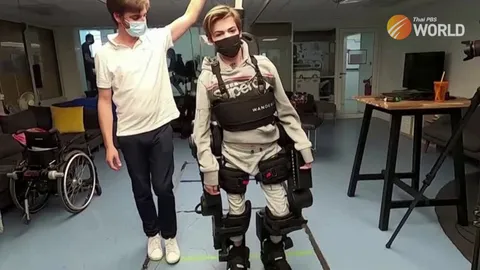
Exoskeleton for stroke rehab cleared by U.S. regulators
AI In-Brief
Thailand News in Brief
Thai PBS World
Thailand and the world, every day
AI can make mistakes. Please double-check.
Exoskeleton for stroke rehab cleared by U.S. regulators
12 Sept 05:01Key points summarised by AI
U.S. regulators (FDA) cleared Wandercraft's self-balancing 'Atalante' exoskeleton for stroke rehabilitation, marking a significant advancement in assistive technology.
The exoskeleton empowers users to move hands-free in multiple directions, fostering independence for individuals with neurological conditions and disabilities.
Wandercraft plans to deploy the first Atalante exoskeletons in the United States during Q1 2023, following 22 successful deployments in clinical settings across Europe and the U.S. since 2020.
This innovation addresses a critical need, as stroke is a leading cause of long-term disability, offering hope for improved mobility and potentially reducing reliance on wheelchairs.
Currently sold to hospitals for rehabilitation, the company aims to develop lighter, personal versions for everyday use by private individuals in the future.
Thailand's Education Ministry is implementing a four-pronged strategy to address its students' below-average performance in PISA 2025 and tackle significant educational inequality.
The plan prioritizes closing performance gaps by increasing funding for small and low-income schools, overhauling the curriculum to foster critical thinking, and adopting a data-driven management system to reduce teacher workload.
Key initiatives include enhancing school safety, combating cyberbullying, and expanding mental health support through peer-to-peer networks, recognizing the severe impact of distress on academic performance.
An education expert advises verifying if PISA improvements stem from structural changes, advocating for a revived STEM curriculum with practical 'learn by doing' methods, and urging bureaucratic reform to link teacher evaluations to student development.