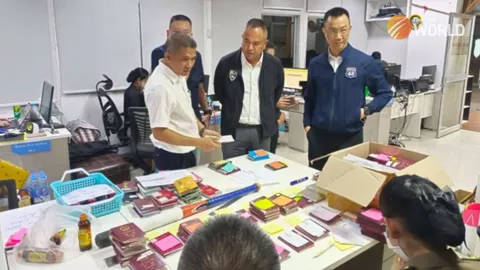
Thai immigration police arrested a woman, "Angsana," in Bangkok, seizing equipment like ink, pens, and seals used for forging visas and fake passports.
The arrest was a follow-up to an investigation into foreigners found departing Thailand with counterfeit visas, tracing the fraudulent activity to a company in the Bueng Kum area.
A subsequent raid on the company's premises uncovered 700 passports, with 124 containing fake visas, and led to an employee being held for questioning.
The scheme involved brokers connecting foreigners who had overstayed their visas with the company to acquire falsified documents.
Thailand's Education Ministry is implementing a four-pronged strategy to address its students' below-average performance in PISA 2025 and tackle significant educational inequality.
The plan prioritizes closing performance gaps by increasing funding for small and low-income schools, overhauling the curriculum to foster critical thinking, and adopting a data-driven management system to reduce teacher workload.
Key initiatives include enhancing school safety, combating cyberbullying, and expanding mental health support through peer-to-peer networks, recognizing the severe impact of distress on academic performance.
An education expert advises verifying if PISA improvements stem from structural changes, advocating for a revived STEM curriculum with practical 'learn by doing' methods, and urging bureaucratic reform to link teacher evaluations to student development.