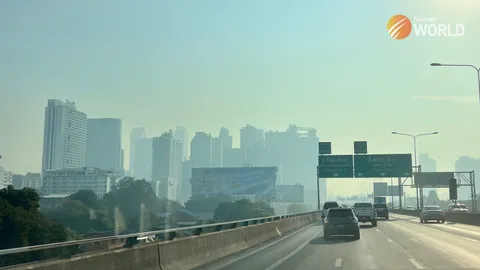
Thailand’s worsening PM2.5 problem is lost in the fog of politics
AI In-Brief
Thailand News in Brief
Thai PBS World
Thailand and the world, every day
AI can make mistakes. Please double-check.
Thailand’s worsening PM2.5 problem is lost in the fog of politics
13 Sept 09:54Key points summarised by AI
Thailand faces a worsening PM2.5 crisis, with dangerously high pollution levels persisting due to the government's slow response despite the issue being a national agenda item since 2019.
Government efforts, including the 2019-2024 Smog Management Plan, show little tangible progress, while Prime Minister Prayut has stalled or rejected several proposed clean air laws.
Major pollution contributors include delayed Euro 5 fuel standards for vehicles, uninspected industrial factories lacking emission data, and prevalent agricultural field burning.
Experts propose tax incentives for eco-friendly vehicles and congestion fees, while civil society and political parties push for new "Clean Air" legislation to establish clean air as a basic health right and register polluters.
With an upcoming general election, political parties are increasingly incorporating anti-pollution policies into their campaigns, underscoring the issue's growing public and political importance.
Thailand's Education Ministry is implementing a four-pronged strategy to address its students' below-average performance in PISA 2025 and tackle significant educational inequality.
The plan prioritizes closing performance gaps by increasing funding for small and low-income schools, overhauling the curriculum to foster critical thinking, and adopting a data-driven management system to reduce teacher workload.
Key initiatives include enhancing school safety, combating cyberbullying, and expanding mental health support through peer-to-peer networks, recognizing the severe impact of distress on academic performance.
An education expert advises verifying if PISA improvements stem from structural changes, advocating for a revived STEM curriculum with practical 'learn by doing' methods, and urging bureaucratic reform to link teacher evaluations to student development.