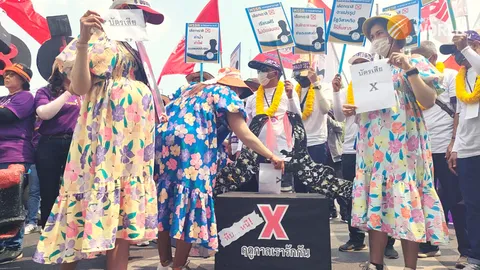
Thai Women's Day on March 8 functions as a "constructively political" platform, enabling women to voice tangible demands that directly address their daily lives and societal needs.
Women's groups presented a nine-point list to the government, advocating for enhanced women's rights, eradication of workplace harassment, extended parental leave, child subsidies, and increased social security access for domestic workers.
These concrete demands, like free tampons or extended maternity leave, exemplify how politics should serve real people's needs, compelling politicians to seriously consider and deliver on issues that directly benefit citizens.
The article contrasts these practical demands with abstract political promises, asserting that focusing on genuine, impactful issues for ordinary citizens is vital for achieving authentic "reform" and societal progress in Thailand.
Thailand's Education Ministry is implementing a four-pronged strategy to address its students' below-average performance in PISA 2025 and tackle significant educational inequality.
The plan prioritizes closing performance gaps by increasing funding for small and low-income schools, overhauling the curriculum to foster critical thinking, and adopting a data-driven management system to reduce teacher workload.
Key initiatives include enhancing school safety, combating cyberbullying, and expanding mental health support through peer-to-peer networks, recognizing the severe impact of distress on academic performance.
An education expert advises verifying if PISA improvements stem from structural changes, advocating for a revived STEM curriculum with practical 'learn by doing' methods, and urging bureaucratic reform to link teacher evaluations to student development.