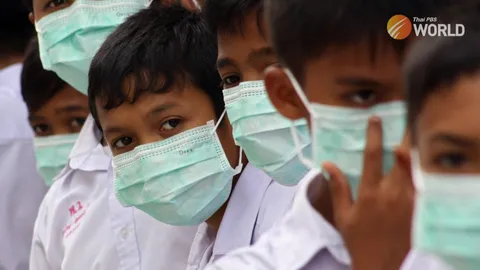
Thailand is grappling with a severe ultra-fine dust (PM 2.5) crisis, causing widespread health issues, particularly for vulnerable groups, and forcing residents to alter daily life and even relocate due to toxic air quality.
The Thai Health Promotion Foundation (ThaiHealth) and Bangkok Metropolitan Administration (BMA) launched a 'fighting fine dust' project in schools, educating students and staff on PM 2.5 risks and protective measures, with plans for expansion.
The Department of Health, ThaiHealth, and Chiang Mai University are establishing 'dust-free' rooms in child development centers, especially in high-risk areas like Chiang Mai, to shield children and other vulnerable individuals from harmful air pollutants.
Air pollution has led to a significant public health crisis, with over 1.3 million people seeking treatment for related illnesses in early 2023, highlighting the urgent need for effective interventions to protect the population, especially children.
Thailand's Education Ministry is implementing a four-pronged strategy to address its students' below-average performance in PISA 2025 and tackle significant educational inequality.
The plan prioritizes closing performance gaps by increasing funding for small and low-income schools, overhauling the curriculum to foster critical thinking, and adopting a data-driven management system to reduce teacher workload.
Key initiatives include enhancing school safety, combating cyberbullying, and expanding mental health support through peer-to-peer networks, recognizing the severe impact of distress on academic performance.
An education expert advises verifying if PISA improvements stem from structural changes, advocating for a revived STEM curriculum with practical 'learn by doing' methods, and urging bureaucratic reform to link teacher evaluations to student development.