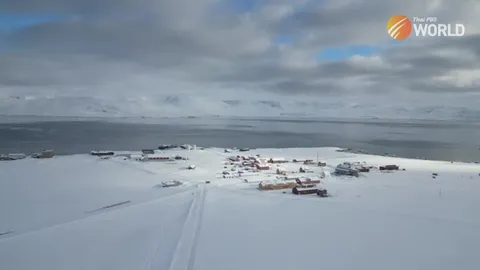
Climate change thaws world's northernmost research station
AI In-Brief
Thailand News in Brief
Thai PBS World
Thailand and the world, every day
AI can make mistakes. Please double-check.
Climate change thaws world's northernmost research station
13 Sept 06:56Key points summarised by AI
Ny-Alesund, the world's northernmost research station in Norway's Svalbard, is experiencing unprecedented warming, up to seven times the global average, making it the fastest-warming place on Earth.
Scientists drilling for ice cores encountered massive water pools within glaciers at surprisingly shallow depths, a clear and shocking sign of rapid ice melt and rising temperatures in the region.
The extreme Arctic warming is disrupting critical research efforts, threatening wildlife like polar bears, and even destabilizing the research station itself due to thawing permafrost, highlighting the urgent need for data collection.
Thailand's Education Ministry is implementing a four-pronged strategy to address its students' below-average performance in PISA 2025 and tackle significant educational inequality.
The plan prioritizes closing performance gaps by increasing funding for small and low-income schools, overhauling the curriculum to foster critical thinking, and adopting a data-driven management system to reduce teacher workload.
Key initiatives include enhancing school safety, combating cyberbullying, and expanding mental health support through peer-to-peer networks, recognizing the severe impact of distress on academic performance.
An education expert advises verifying if PISA improvements stem from structural changes, advocating for a revived STEM curriculum with practical 'learn by doing' methods, and urging bureaucratic reform to link teacher evaluations to student development.