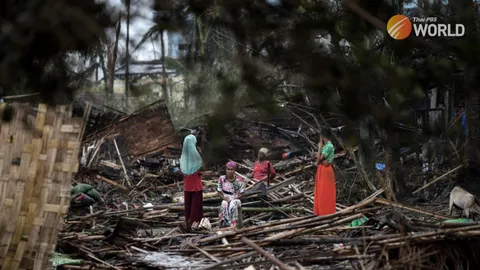
Cyclone Mocha's death toll in Myanmar surged to at least 81, predominantly in Rakhine state, with fears of more casualties due to over a hundred missing persons.
The powerful cyclone, the strongest in over a decade, caused widespread destruction, including collapsed buildings, downed infrastructure, and a devastating storm surge, particularly impacting vulnerable Rohingya communities.
Affected areas face a severe humanitarian crisis, with many villagers, especially in Rohingya displacement camps, reporting a lack of aid, broken infrastructure, and urgent needs for food and supplies.
While international bodies like the UN are assessing damage and China offered assistance, local residents highlight a critical delay in aid reaching the most impacted communities.
Thailand's Education Ministry is implementing a four-pronged strategy to address its students' below-average performance in PISA 2025 and tackle significant educational inequality.
The plan prioritizes closing performance gaps by increasing funding for small and low-income schools, overhauling the curriculum to foster critical thinking, and adopting a data-driven management system to reduce teacher workload.
Key initiatives include enhancing school safety, combating cyberbullying, and expanding mental health support through peer-to-peer networks, recognizing the severe impact of distress on academic performance.
An education expert advises verifying if PISA improvements stem from structural changes, advocating for a revived STEM curriculum with practical 'learn by doing' methods, and urging bureaucratic reform to link teacher evaluations to student development.