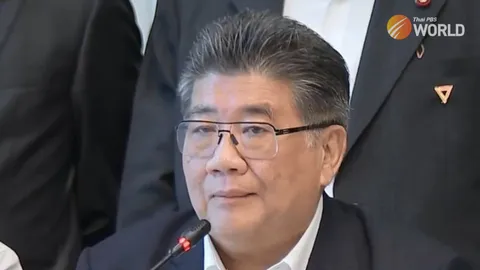
Pheu Thai's assertion that the second-largest party should traditionally rival the biggest is democratically flawed, especially given their close election results and ideological alignment with Move Forward.
Deputy leader Phumtham Wechayachai's justification for a rivalry based on 'what always happened' is historically inaccurate and overlooks the parties' shared voter base and policy compatibility, unlike past political divides.
True democracy demands collaboration between Move Forward and Pheu Thai, the two parties with the most combined popular votes, particularly since their differences are primarily economic and negotiable, not irreconcilable ideological divides.
This 'winner-take-all' mentality fosters destructive politics, promotes unfair practices, widens political divides, and ultimately undermines the principles of constructive governance and democratic progress.
Thailand's Education Ministry is implementing a four-pronged strategy to address its students' below-average performance in PISA 2025 and tackle significant educational inequality.
The plan prioritizes closing performance gaps by increasing funding for small and low-income schools, overhauling the curriculum to foster critical thinking, and adopting a data-driven management system to reduce teacher workload.
Key initiatives include enhancing school safety, combating cyberbullying, and expanding mental health support through peer-to-peer networks, recognizing the severe impact of distress on academic performance.
An education expert advises verifying if PISA improvements stem from structural changes, advocating for a revived STEM curriculum with practical 'learn by doing' methods, and urging bureaucratic reform to link teacher evaluations to student development.