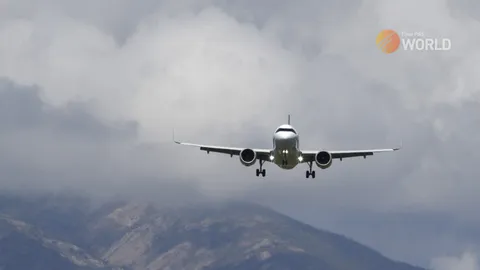
Want a climate-friendly flight? It's going to take a while and cost you more
AI In-Brief
Thailand News in Brief
Thai PBS World
Thailand and the world, every day
AI can make mistakes. Please double-check.
Want a climate-friendly flight? It's going to take a while and cost you more
14 Sept 01:42Key points summarised by AI
Climate-friendly flights will be more expensive and take significant time to become widespread due to the scarcity and high cost of Sustainable Aviation Fuel (SAF), which currently makes up only 0.1% of jet fuel.
SAF is considered the aviation industry's primary solution for achieving net-zero emissions by 2050, yet its limited supply and high production costs raise concerns about its widespread adoption and potential impact on passenger ticket prices.
Airlines face accusations of "greenwashing" for promoting environmental initiatives while SAF remains scarce, leading to skepticism even within the industry about the feasibility of meeting ambitious net-zero targets.
Alternative technologies like electric or hydrogen planes are decades away, and current regulatory efforts (EU mandates, US tax incentives) struggle to overcome the vast gap between SAF production and the industry's immense fuel demands.
Thailand's Education Ministry is implementing a four-pronged strategy to address its students' below-average performance in PISA 2025 and tackle significant educational inequality.
The plan prioritizes closing performance gaps by increasing funding for small and low-income schools, overhauling the curriculum to foster critical thinking, and adopting a data-driven management system to reduce teacher workload.
Key initiatives include enhancing school safety, combating cyberbullying, and expanding mental health support through peer-to-peer networks, recognizing the severe impact of distress on academic performance.
An education expert advises verifying if PISA improvements stem from structural changes, advocating for a revived STEM curriculum with practical 'learn by doing' methods, and urging bureaucratic reform to link teacher evaluations to student development.