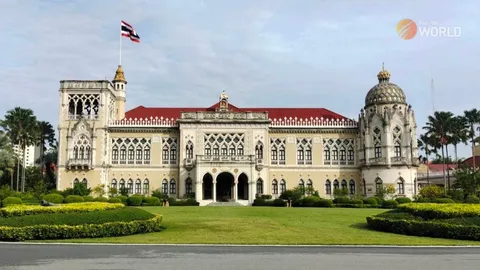
Historically, Thai governments, even those with significant parliamentary majorities, have consistently faced instability, prolonged protests, and military interventions, demonstrating that electoral success does not guarantee power or stability.
The victorious Move Forward party faces immediate challenges including legal cases, contentious policy issues like Article 112, and potential conflicts with coalition partners over figures such as Thaksin Shinawatra, all threatening its ability to form or maintain a stable government.
Should Move Forward fail, a Pheu Thai-led administration would also confront immense instability, navigating the controversial return of Thaksin, managing angry Move Forward supporters, and dealing with internal party divisions.
The complex political landscape suggests that even unlikely coalitions, such as a Prawit Wongsuwan-led government with Pheu Thai, would struggle with inherent fragility and contentious issues, indicating a collective 'dead-end' for all major political factions.
Thailand's Education Ministry is implementing a four-pronged strategy to address its students' below-average performance in PISA 2025 and tackle significant educational inequality.
The plan prioritizes closing performance gaps by increasing funding for small and low-income schools, overhauling the curriculum to foster critical thinking, and adopting a data-driven management system to reduce teacher workload.
Key initiatives include enhancing school safety, combating cyberbullying, and expanding mental health support through peer-to-peer networks, recognizing the severe impact of distress on academic performance.
An education expert advises verifying if PISA improvements stem from structural changes, advocating for a revived STEM curriculum with practical 'learn by doing' methods, and urging bureaucratic reform to link teacher evaluations to student development.