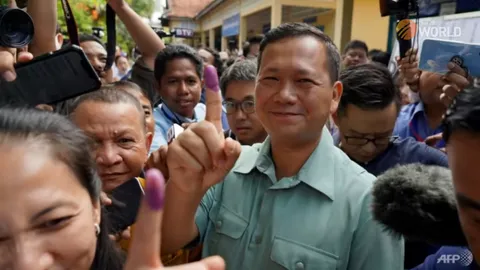
King Norodom Sihamoni is set to appoint Hun Manet as Cambodia's new Prime Minister, succeeding his father Hun Sen after nearly four decades in power.
This leadership transition follows a July election widely condemned as a sham, where the opposition Candlelight Party was barred, leading to a near-total victory for the ruling party.
To officially assume the role, Hun Manet and his new cabinet must win a parliamentary confidence vote scheduled for August 22.
Despite stepping down, Hun Sen has pledged to continue dominating Cambodian politics, warning he would return as PM if his son's life were endangered and planning to become Senate president next year.
Analysts view Hun Manet as politically untested and do not anticipate a significant shift towards a more liberal path, despite his Western education.
Thailand's Education Ministry is implementing a four-pronged strategy to address its students' below-average performance in PISA 2025 and tackle significant educational inequality.
The plan prioritizes closing performance gaps by increasing funding for small and low-income schools, overhauling the curriculum to foster critical thinking, and adopting a data-driven management system to reduce teacher workload.
Key initiatives include enhancing school safety, combating cyberbullying, and expanding mental health support through peer-to-peer networks, recognizing the severe impact of distress on academic performance.
An education expert advises verifying if PISA improvements stem from structural changes, advocating for a revived STEM curriculum with practical 'learn by doing' methods, and urging bureaucratic reform to link teacher evaluations to student development.