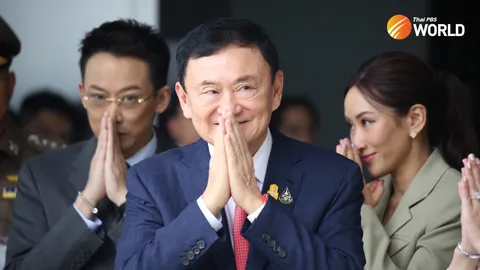
Thaksin Shinawatra's return is uniquely favored by the new Srettha government, a coalition of former rivals and allies, enabling his lenient treatment under the guise of "reconciliation."
The Move Forward Party (MFP) faces a significant paradox: criticizing Thaksin's special treatment would contradict their "pro-democracy" stance against past political injustices, making a direct attack difficult.
The opposition's unity is fractured by differing views on Thaksin's past convictions, with MFP viewing them as undemocratic and the Democrat Party seeing them as justified, hindering a cohesive challenge to his current situation.
This complex political landscape allows Thaksin to thrive amidst public criticism, as the government anticipates and aims to absorb the outrage, while the opposition struggles with an ideological test.
Thailand's Education Ministry is implementing a four-pronged strategy to address its students' below-average performance in PISA 2025 and tackle significant educational inequality.
The plan prioritizes closing performance gaps by increasing funding for small and low-income schools, overhauling the curriculum to foster critical thinking, and adopting a data-driven management system to reduce teacher workload.
Key initiatives include enhancing school safety, combating cyberbullying, and expanding mental health support through peer-to-peer networks, recognizing the severe impact of distress on academic performance.
An education expert advises verifying if PISA improvements stem from structural changes, advocating for a revived STEM curriculum with practical 'learn by doing' methods, and urging bureaucratic reform to link teacher evaluations to student development.