Will new foreign policy tilt away from China towards the West?
AI In-Brief
Thailand News in Brief
Thai PBS World
Thailand and the world, every day
AI can make mistakes. Please double-check.
Will new foreign policy tilt away from China towards the West?
21 Sept 07:22Key points summarised by AI
The new Srettha government prioritizes an economically driven foreign policy, actively seeking global market access and aiming to reposition Thailand amidst evolving geopolitical conflicts.
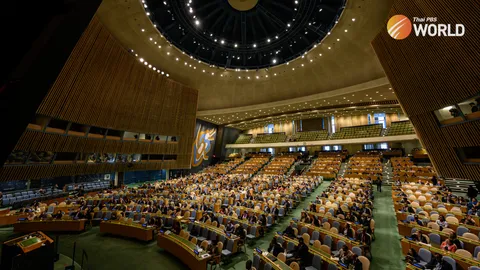
Initial indicators, including key officials' US educational backgrounds and their first international trip to the UN General Assembly, suggest a potential shift away from the previous pro-China stance towards closer engagement with the West.
Despite a perceived lack of international security expertise among top ministers, the administration is integrating military leadership, such as the Supreme Commander, into foreign policy to address this gap.
Thailand faces complex challenges in balancing relations with global superpowers like the US, China, and Russia, highlighted by issues such as the submarine engine deal, F-35 fighter jet acquisition, and UN voting patterns.
The new government is urged to adopt a more vocal and humanitarian-focused approach to the Myanmar crisis, advocating for peace, human rights, and preparing for potential refugee influxes.
Thailand's Education Ministry is implementing a four-pronged strategy to address its students' below-average performance in PISA 2025 and tackle significant educational inequality.
The plan prioritizes closing performance gaps by increasing funding for small and low-income schools, overhauling the curriculum to foster critical thinking, and adopting a data-driven management system to reduce teacher workload.
Key initiatives include enhancing school safety, combating cyberbullying, and expanding mental health support through peer-to-peer networks, recognizing the severe impact of distress on academic performance.
An education expert advises verifying if PISA improvements stem from structural changes, advocating for a revived STEM curriculum with practical 'learn by doing' methods, and urging bureaucratic reform to link teacher evaluations to student development.