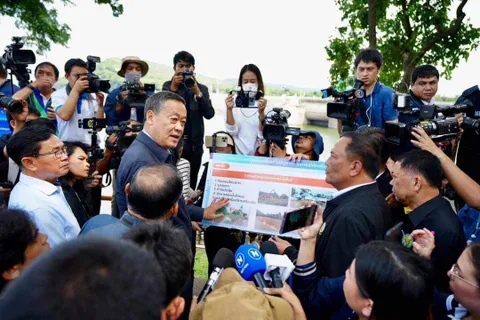
‘Listen to the people’: PM’s push for water mega-projects triggers flood of concern
AI In-Brief
Thailand News in Brief
Thai PBS World
Thailand and the world, every day
AI can make mistakes. Please double-check.
‘Listen to the people’: PM’s push for water mega-projects triggers flood of concern
23 Sept 05:32Key points summarised by AI
Prime Minister Srettha Thavisin's support for a 2.2-trillion-baht water management mega-project across the Mekong, Chi, and Mun rivers has ignited widespread alarm among Thai environmentalists and concerned citizens.
Experts caution against rushing the decision, citing the Mekong River's uncertain future due to upstream dams and climate change, and advocate for holistic, localized solutions over potentially wasteful mega-projects.
Local networks and human rights groups criticize the project for overlooking past failures, lacking public consultation, and threatening to displace communities, destroy biodiversity, and disrupt traditional livelihoods.
The National Human Rights Commission (NHRC) has urged a thorough review of the project's necessity and feasibility, noting complaints from locals who lack clear information on the proposed disruptions to their lives.
Similar opposition is voiced in Northern Thailand against the Yuam Water Diversion project, with residents fearing environmental destruction and a lack of public participation in its impact assessment.
Thailand's Education Ministry is implementing a four-pronged strategy to address its students' below-average performance in PISA 2025 and tackle significant educational inequality.
The plan prioritizes closing performance gaps by increasing funding for small and low-income schools, overhauling the curriculum to foster critical thinking, and adopting a data-driven management system to reduce teacher workload.
Key initiatives include enhancing school safety, combating cyberbullying, and expanding mental health support through peer-to-peer networks, recognizing the severe impact of distress on academic performance.
An education expert advises verifying if PISA improvements stem from structural changes, advocating for a revived STEM curriculum with practical 'learn by doing' methods, and urging bureaucratic reform to link teacher evaluations to student development.