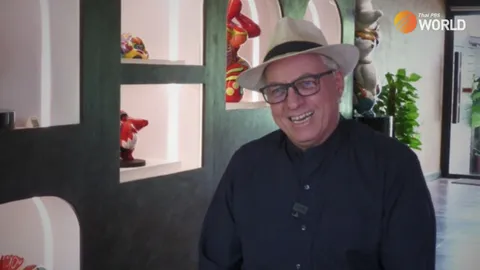
French sculptor Arnaud Nazare-Aga, who spent 14 years in a Tibetan Buddhist temple from age 14, deeply integrates Buddhist philosophy, especially the law of karma, into his worldview, believing it offers peace and explains life's consequences.
Despite initial self-doubt, he became a successful sculptor, gaining international recognition for his vibrant, playful, and tactile artworks, notably creating the first collection based on 'The Little Prince'.
His masterpiece, 'The Little Prince in the Dark', embodies a core Buddhist teaching: true happiness is an inner experience, not found through external satisfaction, a message he contrasts with modern online life.
Nazare-Aga expresses concern over social media's impact, where virtual experiences replace real-life engagement, and anticipates AI will further blur the lines between online and offline realities for younger generations.
Thailand's Education Ministry is implementing a four-pronged strategy to address its students' below-average performance in PISA 2025 and tackle significant educational inequality.
The plan prioritizes closing performance gaps by increasing funding for small and low-income schools, overhauling the curriculum to foster critical thinking, and adopting a data-driven management system to reduce teacher workload.
Key initiatives include enhancing school safety, combating cyberbullying, and expanding mental health support through peer-to-peer networks, recognizing the severe impact of distress on academic performance.
An education expert advises verifying if PISA improvements stem from structural changes, advocating for a revived STEM curriculum with practical 'learn by doing' methods, and urging bureaucratic reform to link teacher evaluations to student development.