Pheu Thai, despite its historical periods of strong political dominance, has consistently faced unexpected downfalls, from coups to party dissolutions, underscoring a pattern of inherent vulnerability.
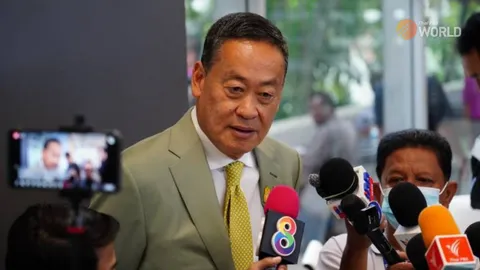
Prime Minister Srettha Thavisin's tenure begins under uniquely challenging circumstances, lacking the traditional 'honeymoon' period and navigating a fragile coalition, particularly with the contentious digital wallet policy.
The party's current political fragility is dual-edged; while facing genuine opposition to its flagship policy, a strategic passage of the digital wallet bill, even if heavily modified, could paradoxically stabilize its position and prevent greater turmoil.
A speculative theory suggests Pheu Thai might be deliberately orchestrating the digital wallet policy's parliamentary defeat to avoid future financial complications, using perceived vulnerability as a tactic for the party's long-term survival.
The article likens Pheu Thai's strategy to a 'high line' in football, where embracing a seemingly vulnerable position is a calculated risk designed to secure ultimate victory and ensure the party's continued existence.
Thailand's Education Ministry is implementing a four-pronged strategy to address its students' below-average performance in PISA 2025 and tackle significant educational inequality.
The plan prioritizes closing performance gaps by increasing funding for small and low-income schools, overhauling the curriculum to foster critical thinking, and adopting a data-driven management system to reduce teacher workload.
Key initiatives include enhancing school safety, combating cyberbullying, and expanding mental health support through peer-to-peer networks, recognizing the severe impact of distress on academic performance.
An education expert advises verifying if PISA improvements stem from structural changes, advocating for a revived STEM curriculum with practical 'learn by doing' methods, and urging bureaucratic reform to link teacher evaluations to student development.