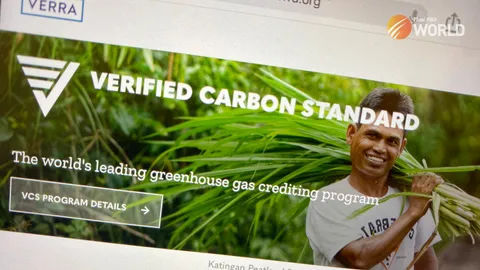
Thai business loves carbon credits, but are they harming the climate and grassroots people?
AI In-Brief
Thailand News in Brief
Thai PBS World
Thailand and the world, every day
AI can make mistakes. Please double-check.
Thai business loves carbon credits, but are they harming the climate and grassroots people?
14 Sept 03:03Key points summarised by AI
Environmentalists caution that carbon credit systems, without stringent regulation, can facilitate 'greenwashing,' allowing businesses to appear eco-friendly while continuing to emit greenhouse gases.
Investigations, including one by The Guardian, have exposed significant flaws, revealing that a high percentage of certified carbon offsets were 'worthless,' prompting major companies to abandon these schemes.
Thailand's aggressive promotion of carbon credits, particularly in reforestation, risks creating monoculture forests with low biodiversity and displacing local communities, prioritizing business interests over genuine ecological and social benefits.
Experts advocate for carbon credits as a temporary tool for decarbonization, emphasizing principled use that includes new planting, ensuring project sustainability, preventing problem displacement, and fairly sharing benefits with local communities.
Thailand's Education Ministry is implementing a four-pronged strategy to address its students' below-average performance in PISA 2025 and tackle significant educational inequality.
The plan prioritizes closing performance gaps by increasing funding for small and low-income schools, overhauling the curriculum to foster critical thinking, and adopting a data-driven management system to reduce teacher workload.
Key initiatives include enhancing school safety, combating cyberbullying, and expanding mental health support through peer-to-peer networks, recognizing the severe impact of distress on academic performance.
An education expert advises verifying if PISA improvements stem from structural changes, advocating for a revived STEM curriculum with practical 'learn by doing' methods, and urging bureaucratic reform to link teacher evaluations to student development.