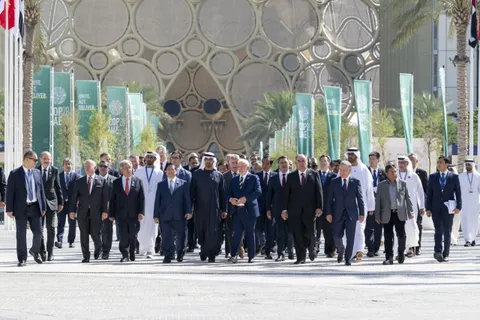
Clashes over fossil fuels, Gaza conflict cloud COP28 climate summit
AI In-Brief
Thailand News in Brief
Thai PBS World
Thailand and the world, every day
AI can make mistakes. Please double-check.
Clashes over fossil fuels, Gaza conflict cloud COP28 climate summit
13 Sept 16:39Key points summarised by AI
**Deep Divisions on Fossil Fuels**: U.N. Secretary-General Antonio Guterres urged an immediate end to all fossil fuel use to meet the 1.5-degree warming limit, directly challenging the COP28 president's proposal for continued use and highlighting a central conflict at the summit.
**Gaza Conflict Distraction**: Geopolitical tensions, particularly the Israel-Gaza conflict, significantly diverted attention from climate discussions, with several world leaders using the platform to criticize Israel's actions, breaking traditional non-political norms.
**Varying National Commitments**: Leaders like King Charles III called for urgent climate action, while others, such as British PM Rishi Sunak and Indian PM Narendra Modi, presented differing approaches to climate finance and historical responsibility for emissions.
**Draft Agreement Options**: The summit's initial draft agreement includes critical options for a final deal, proposing commitments to either "phase down" or "phase out" fossil fuels, quitting coal, tripling renewable energy capacity by 2030, and addressing fossil fuel subsidies.
Thailand's Education Ministry is implementing a four-pronged strategy to address its students' below-average performance in PISA 2025 and tackle significant educational inequality.
The plan prioritizes closing performance gaps by increasing funding for small and low-income schools, overhauling the curriculum to foster critical thinking, and adopting a data-driven management system to reduce teacher workload.
Key initiatives include enhancing school safety, combating cyberbullying, and expanding mental health support through peer-to-peer networks, recognizing the severe impact of distress on academic performance.
An education expert advises verifying if PISA improvements stem from structural changes, advocating for a revived STEM curriculum with practical 'learn by doing' methods, and urging bureaucratic reform to link teacher evaluations to student development.