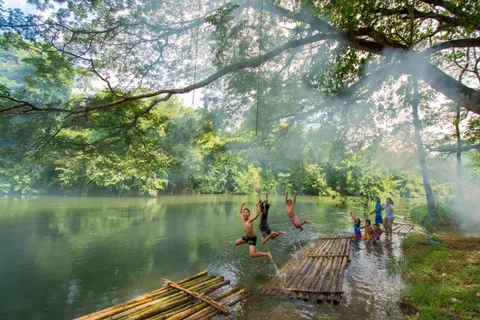
Baan Tham Suea offers a tranquil escape just two hours from Bangkok, providing a serene retreat amidst rewilded green spaces, the scenic Phetchaburi River, and Thailand's rustic countryside.
The community transformed from traditional farming to environmental preservation, launching a groundbreaking 'tree bank' project that rejuvenated the forest and established sustainable livelihoods.
Visitors can engage in unique activities such as making seed bombs for reforestation, inflatable boat rafting along the Phetchaburi River, and exploring a vibrant weekend farmer's market showcasing local produce and crafts.
The village functions as an organic farming and sufficiency economy learning site, demonstrating a strong commitment to environmental conservation and sustainable living practices, contributing to a Net Zero society.
Thailand's Education Ministry is implementing a four-pronged strategy to address its students' below-average performance in PISA 2025 and tackle significant educational inequality.
The plan prioritizes closing performance gaps by increasing funding for small and low-income schools, overhauling the curriculum to foster critical thinking, and adopting a data-driven management system to reduce teacher workload.
Key initiatives include enhancing school safety, combating cyberbullying, and expanding mental health support through peer-to-peer networks, recognizing the severe impact of distress on academic performance.
An education expert advises verifying if PISA improvements stem from structural changes, advocating for a revived STEM curriculum with practical 'learn by doing' methods, and urging bureaucratic reform to link teacher evaluations to student development.