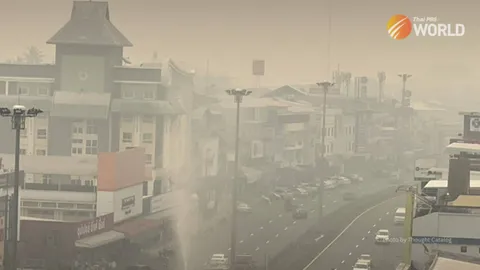
Will new air-quality laws cure Thailand’s smog-driven health crisis?
AI In-Brief
Thailand News in Brief
Thai PBS World
Thailand and the world, every day
AI can make mistakes. Please double-check.
Will new air-quality laws cure Thailand’s smog-driven health crisis?
13 Sept 11:03Key points summarised by AI
Thailand's Parliament overwhelmingly passed seven "clean air" bills in their first reading, aiming to curb the severe, decades-long public health threat posed by PM2.5 smog.
The PM2.5 crisis, linked to serious health issues and premature deaths, has seen smog seasons lengthen significantly, with air quality in some northern regions comparable to heavy smoking.
Proposed solutions include tackling root causes like agricultural burning and urban emissions, empowering provincial governors, implementing tax incentives, and replacing blanket bans with a controlled burning registration system.
Critics argue many bills may duplicate existing laws, emphasizing that effective enforcement and addressing a wider range of pollutants are crucial for a lasting solution.
Thailand's Education Ministry is implementing a four-pronged strategy to address its students' below-average performance in PISA 2025 and tackle significant educational inequality.
The plan prioritizes closing performance gaps by increasing funding for small and low-income schools, overhauling the curriculum to foster critical thinking, and adopting a data-driven management system to reduce teacher workload.
Key initiatives include enhancing school safety, combating cyberbullying, and expanding mental health support through peer-to-peer networks, recognizing the severe impact of distress on academic performance.
An education expert advises verifying if PISA improvements stem from structural changes, advocating for a revived STEM curriculum with practical 'learn by doing' methods, and urging bureaucratic reform to link teacher evaluations to student development.