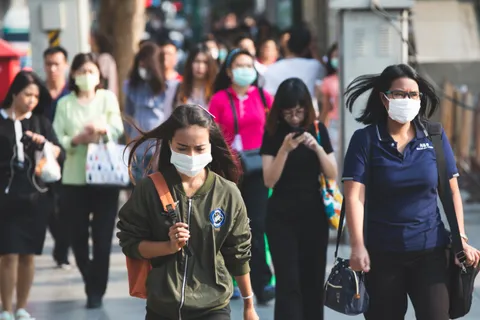
Thailand’s PM2.5 issue discussed at international conference
AI In-Brief
Thailand News in Brief
Thai PBS World
Thailand and the world, every day
AI can make mistakes. Please double-check.
Thailand’s PM2.5 issue discussed at international conference
25 Sept 02:13Key points summarised by AI
Thailand presented its severe PM2.5 problem, primarily caused by open burning in forests and urban traffic, to international researchers at a global conference.
Keynote speakers highlighted the serious health impacts of PM2.5, noting that hotspots, particularly in inaccessible northern forests and neighboring countries, pose significant challenges.
Data revealed that PM2.5 in Bangkok peaks in winter due to traffic emissions and atmospheric inversion, while national health impacts surge in March/April, coinciding with peak forest fire activity.
Experts emphasized that solving the complex PM2.5 issue requires a holistic approach, including effective communication, legal measures, and regional cooperation, acknowledging it will be a long-term effort.
Thailand's Education Ministry is implementing a four-pronged strategy to address its students' below-average performance in PISA 2025 and tackle significant educational inequality.
The plan prioritizes closing performance gaps by increasing funding for small and low-income schools, overhauling the curriculum to foster critical thinking, and adopting a data-driven management system to reduce teacher workload.
Key initiatives include enhancing school safety, combating cyberbullying, and expanding mental health support through peer-to-peer networks, recognizing the severe impact of distress on academic performance.
An education expert advises verifying if PISA improvements stem from structural changes, advocating for a revived STEM curriculum with practical 'learn by doing' methods, and urging bureaucratic reform to link teacher evaluations to student development.